
梯级式与托盘式桥架:结构形式决定应用场景
一、通风散热,梯级式桥架的动力之选
1、 Ventilation and heat dissipation, the power choice for stepped bridge structures
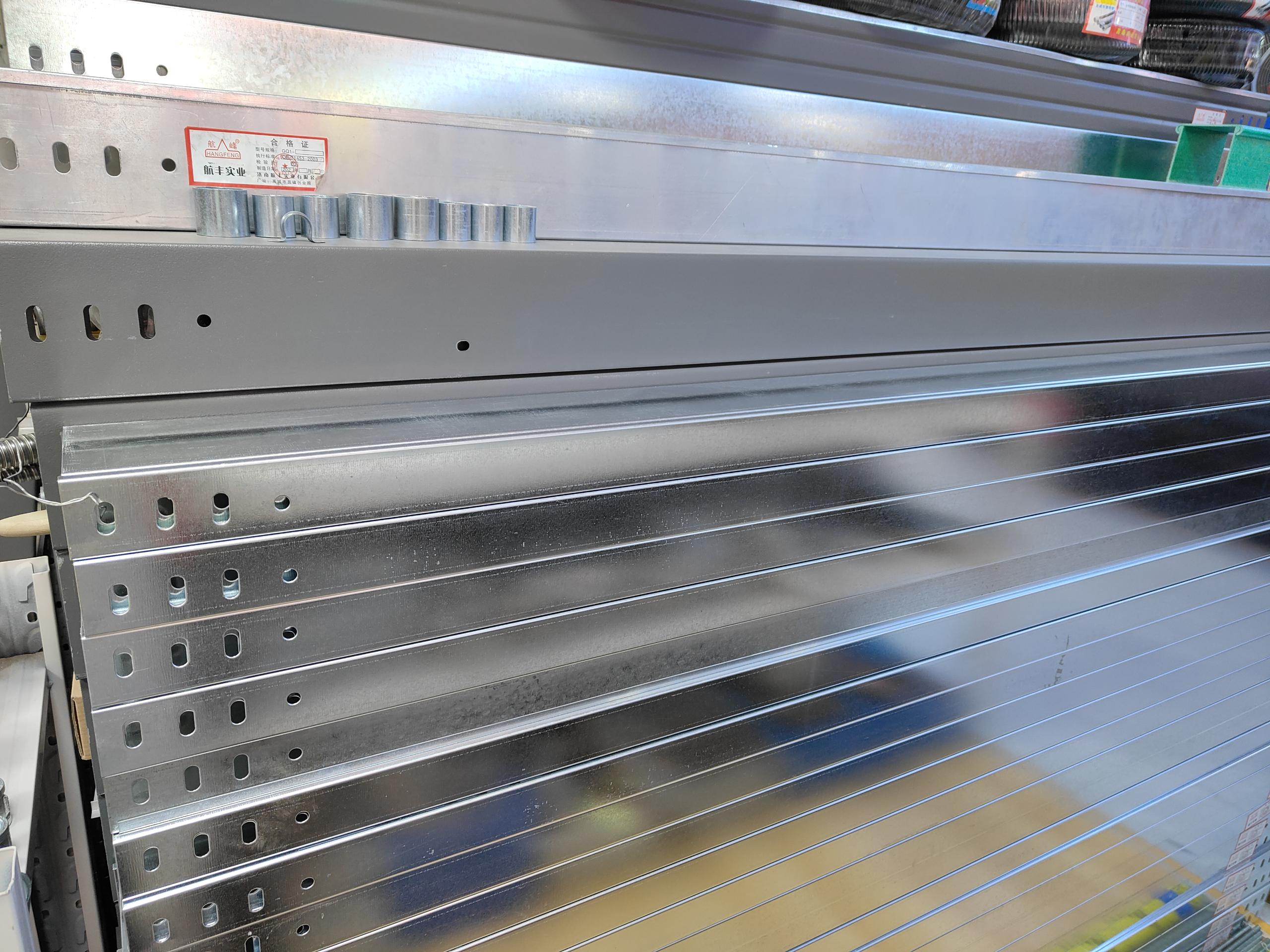
梯级式桥架因其开放式的梯状结构,被公认为是高、低压动力电缆的理想载体。其由侧板与横档(梯梁)构成,电缆直接搁置在横档上,空气可以在电缆之间自由流通,具备出彩佳的散热性能。这一特性对于发热量大的大截面电力电缆至关重要,能够有效降低电缆工作温度,延缓绝缘层老化。在火力发电厂、大型工业车间的动力电缆敷设中,梯级式桥架凭借其重量轻、成本低、安装便捷的优势,往往被优先选用。需要注意的是,由于结构开放,梯级式桥架不适用于需要防尘或防外部信号干扰的场合。
Cascade cable trays are widely recognized as ideal carriers for high and low voltage power cables due to their open ladder like structure. It consists of side panels and crossbars (ladder beams), with cables directly placed on the crossbars, allowing air to freely circulate between the cables and possessing excellent heat dissipation performance. This characteristic is crucial for large section power cables with high heat generation, which can effectively reduce the operating temperature of the cable and delay the aging of the insulation layer. In the laying of power cables in thermal power plants and large industrial workshops, stepped cable trays are often preferred due to their advantages of light weight, low cost, and convenient installation. It should be noted that due to the open structure, the stepped bridge is not suitable for situations that require dust prevention or external signal interference prevention.
二、防护周全,托盘式桥架的兼容之道
2、 Comprehensive protection and compatibility of tray style bridge frames
托盘式桥架在结构上介于梯级式与槽式之间。它采用带有底板的开放式托盘结构,部分型号底板上还冲有散热孔。这种设计使得托盘式桥架既具备了优于槽式桥架的散热能力,又能够对电缆提供比梯级式更好的物理防护,防止小颗粒异物坠落损伤电缆。托盘式桥架的适用面出彩广,既可用于电力电缆,也可用于控制电缆和通信电缆。其槽盒宽度通常大于传统槽式桥架,电缆容量可提升35%,自重却降低18%,在石油、化工、电视通讯等领域广受欢迎。

The tray type bridge is structurally intermediate between the ladder type and the trough type. It adopts an open tray structure with a bottom plate, and some models also have heat dissipation holes punched on the bottom plate. This design enables tray type cable trays to not only have better heat dissipation capabilities than trough type cable trays, but also provide better physical protection for cables than step type cable trays, preventing small particles and foreign objects from falling and damaging cables. Tray type cable trays have a wide range of applications, including power cables, control cables, and communication cables. Its slot box width is usually larger than traditional slot type cable trays, and the cable capacity can be increased by 35%, while the self weight is reduced by 18%. It is widely popular in fields such as petroleum, chemical, and television communication.
三、屏蔽干扰,槽式桥架的封闭堡垒
3、 Shielding interference, enclosed fortress of trough bridge structure
当电缆敷设环境存在严重的电磁干扰,或者线路穿越防火防爆区段时,全封闭的槽式桥架便成为了必选项。槽式桥架(也称线槽)由完全封闭的底板和侧板组成,无散热孔。这种结构能够全方位屏蔽外部的电磁辐射,保护内部信号电缆的传输质量;同时,当配合防火盖板使用时,封闭的腔体能有效阻止火焰蔓延,满足消防规范要求。在大型写字楼、金融商厦、数据中心等弱电系统密集的场所,槽式桥架是竖井和吊顶内线缆管理的标准配置。
When there is severe electromagnetic interference in the cable laying environment, or when the line passes through fire-resistant and explosion-proof sections, a fully enclosed trough bridge becomes a necessary option. Trough type cable tray (also known as trunking) consists of a completely enclosed bottom plate and side plate, without heat dissipation holes. This structure can comprehensively shield external electromagnetic radiation and protect the transmission quality of internal signal cables; Meanwhile, when used in conjunction with fireproof cover plates, the enclosed chamber can effectively prevent the spread of flames and meet the requirements of fire safety regulations. In large office buildings, financial malls, data centers and other places with dense weak current systems, trough cable trays are the standard configuration for cable management in vertical shafts and ceilings.
四、灵活适配,选型背后的系统工程
4、 Flexible adaptation, system engineering behind selection
理解了不同结构形式的特点,非常终还需结合工程实际进行灵活选型。规范明确指出,大跨距(大于3米)工况应选用复合型桥架(FB),户外环境应选用复合环氧树脂桥架(F)。在需要屏蔽干扰时,应选用槽式复合型防腐屏蔽桥架。此外,电缆填充率是选型时建议核实的硬指标:动力电缆通常建议控制在40-50%,控制电缆在50-70%,并需预留10-25%的发展余量。只有综合考量环境腐蚀性、电磁兼容要求、荷载能力、防火等级以及未来扩容需求,才能科学地确定非常终的桥架材质与结构选型方案。
Having understood the characteristics of different structural forms, it is ultimately necessary to make flexible selection based on engineering practice. The standard clearly states that composite cable trays (FB) should be used for large-span (greater than 3 meters) working conditions, and composite epoxy resin cable trays (F) should be used for outdoor environments. When it is necessary to shield interference, a trough type composite anti-corrosion shielding bridge should be selected. In addition, cable filling rate is a hard indicator that must be verified during selection: it is usually recommended to control power cables at 40-50%, control cables at 50-70%, and reserve 10-25% of development margin. Only by comprehensively considering environmental corrosiveness, electromagnetic compatibility requirements, load capacity, fire rating, and future expansion needs, can the final material and structural selection scheme for the bridge be scientifically determined.
下一篇:钢制桥架三年就锈穿:热浸锌、冷镀锌、粉末喷涂
相关文章 / Recommended news
 托盘式电缆桥架选用指南是什么?
 镀锌桥架接受着实际场景的严苛检验在哪?
 网格桥架配件安装注意哪些事项?
 电缆桥架防火性能是如何体现的?
 电缆桥架内部电缆的布线方式有哪些?