别再混淆!山东电缆桥架vs线槽,6大核心区别一文分清
别再混淆!山东电缆桥架vs线槽,6大核心区别一文分清
Don't confuse anymore! Shandong cable tray vs trunking, distinguishing 6 core differences in one article
在山东建筑施工、工业生产、厂房运维等场景中,电缆桥架是不可或缺的电力配套设备,但很多人常把它和线槽混为一谈,觉得两者都是走线用的,功能没差别。其实不然,山东电缆桥架和线槽虽同为线缆敷设载体,却在尺寸、用途、结构等多方面有着本质区别,选错不仅影响施工效率,还可能留下隐患。今天就跟大伙唠透,帮山东工程人、运维人员精准区分,避开选型误区。
In Shandong's construction, industrial production, and factory operation and maintenance scenarios, cable trays are indispensable power supporting equipment. However, many people often confuse them with cable trays, thinking that both are used for wiring and have no difference in function. In fact, although Shandong cable trays and trunking are both cable laying carriers, they have essential differences in size, purpose, structure, and other aspects. Choosing the wrong one not only affects construction efficiency, but may also leave safety hazards. Today, I will talk to everyone and help Shandong engineers and maintenance personnel accurately distinguish and avoid selection errors.
先明确核心定位:两者的适用场景和承载对象截然不同,这也是关键的区分点。山东电缆桥架主打“承载大口径、多规格电缆”,主要用于敷设电力电缆、控制电缆,适配工业厂房、大型楼宇、变电站等大规模线缆布线场景,比如山东化工园区、制造业厂房的强电系统铺设,都离不开它的支撑。而线槽侧重“收纳细小导线”,多用于敷设通讯线缆、弱电导线,常见于家庭装修、办公室布线等小型场景,承载能力较弱。
Firstly, clarify the core positioning: the applicable scenarios and carrying objects of the two are completely different, which is also the most critical distinguishing point. Shandong cable trays are mainly used to carry large-diameter and multi specification cables, and are mainly used for laying power cables, control cables, and adapting to large-scale cable wiring scenarios such as industrial plants, large buildings, and substations. For example, the laying of strong electrical systems in Shandong chemical industrial parks and manufacturing plants cannot be separated from their support. However, cable trays focus on "storing small wires" and are often used for laying communication cables and weak current wires. They are commonly used in small scenarios such as home decoration and office wiring, and have weak load-bearing capacity.
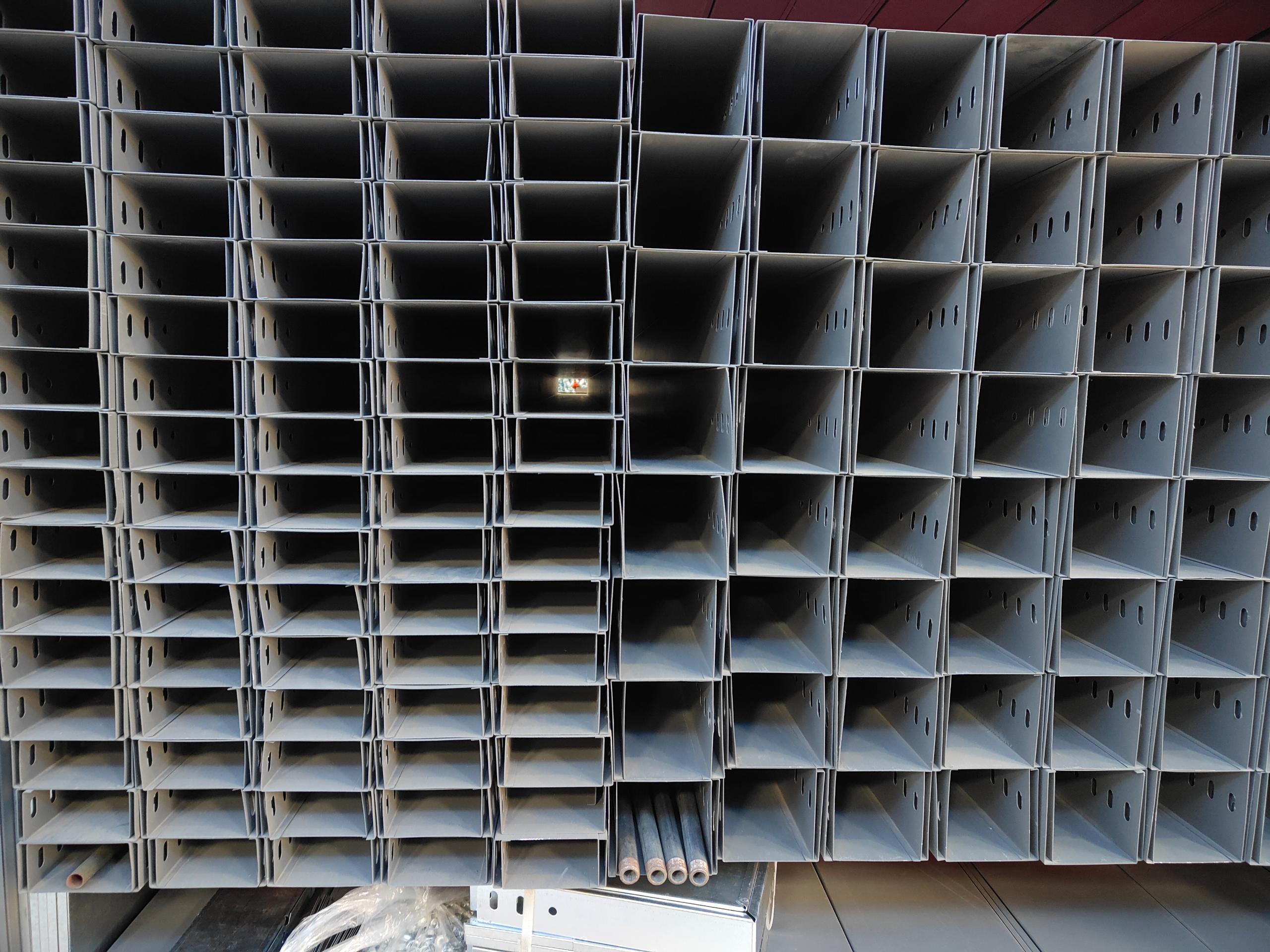
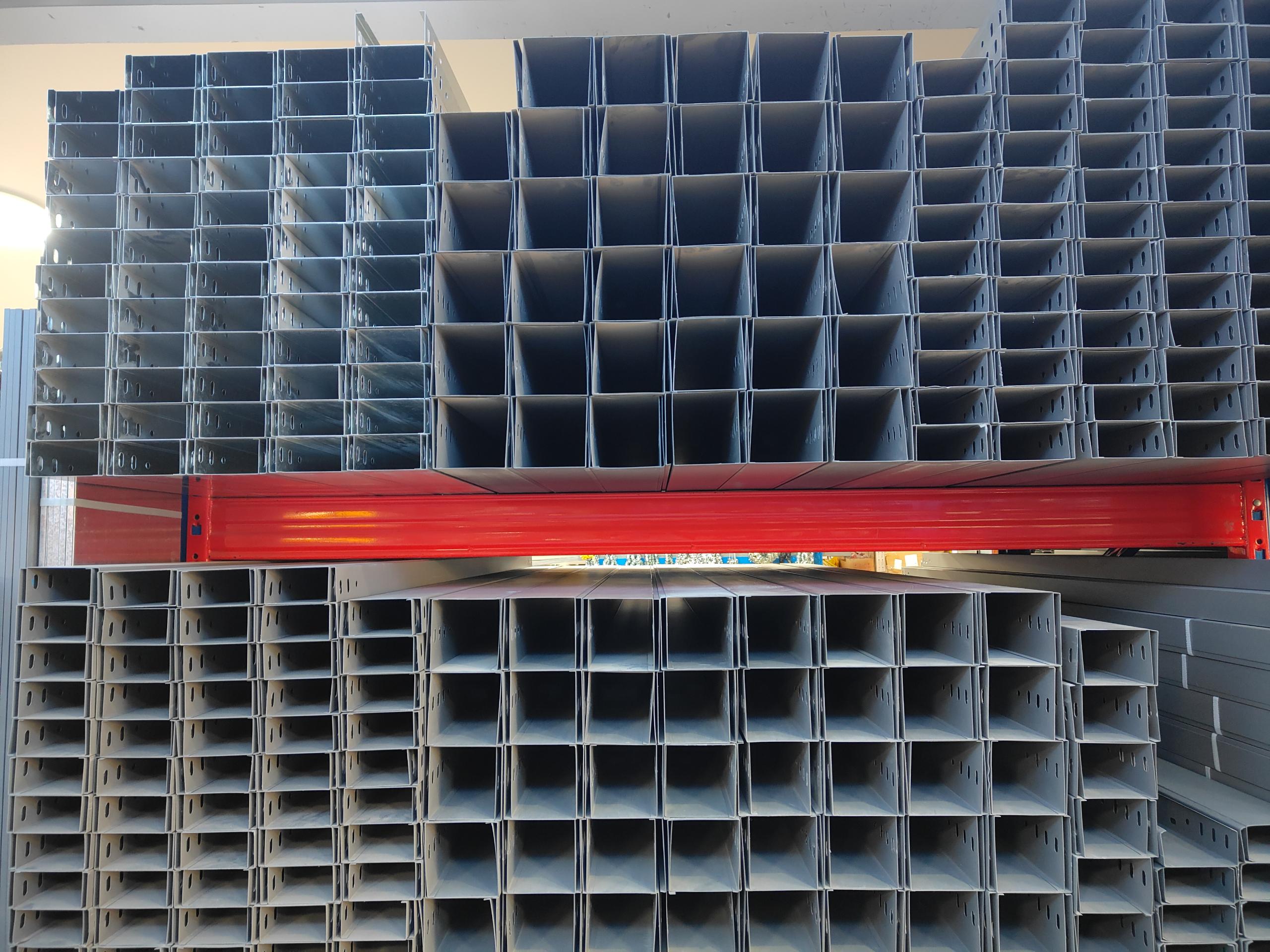
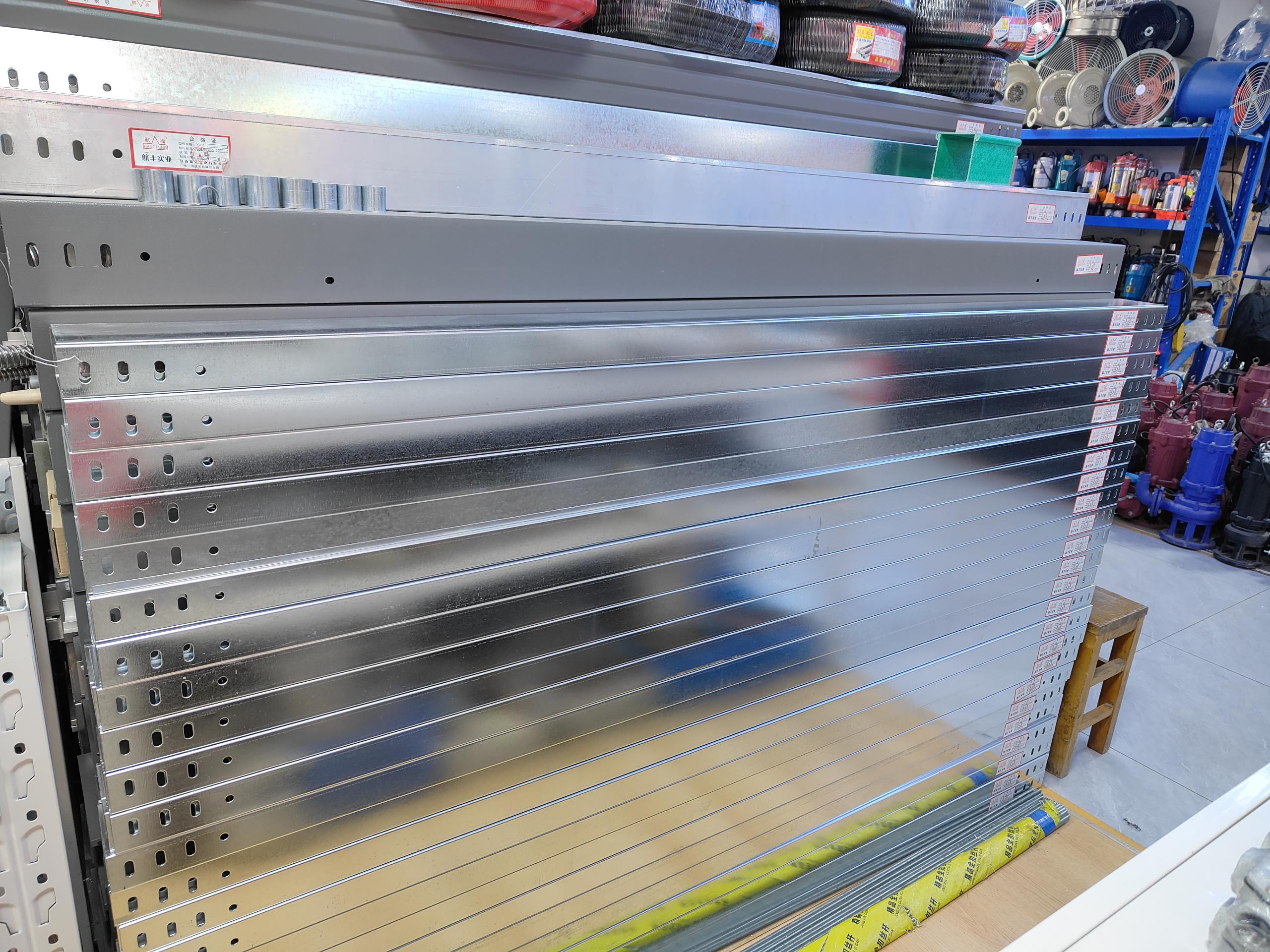
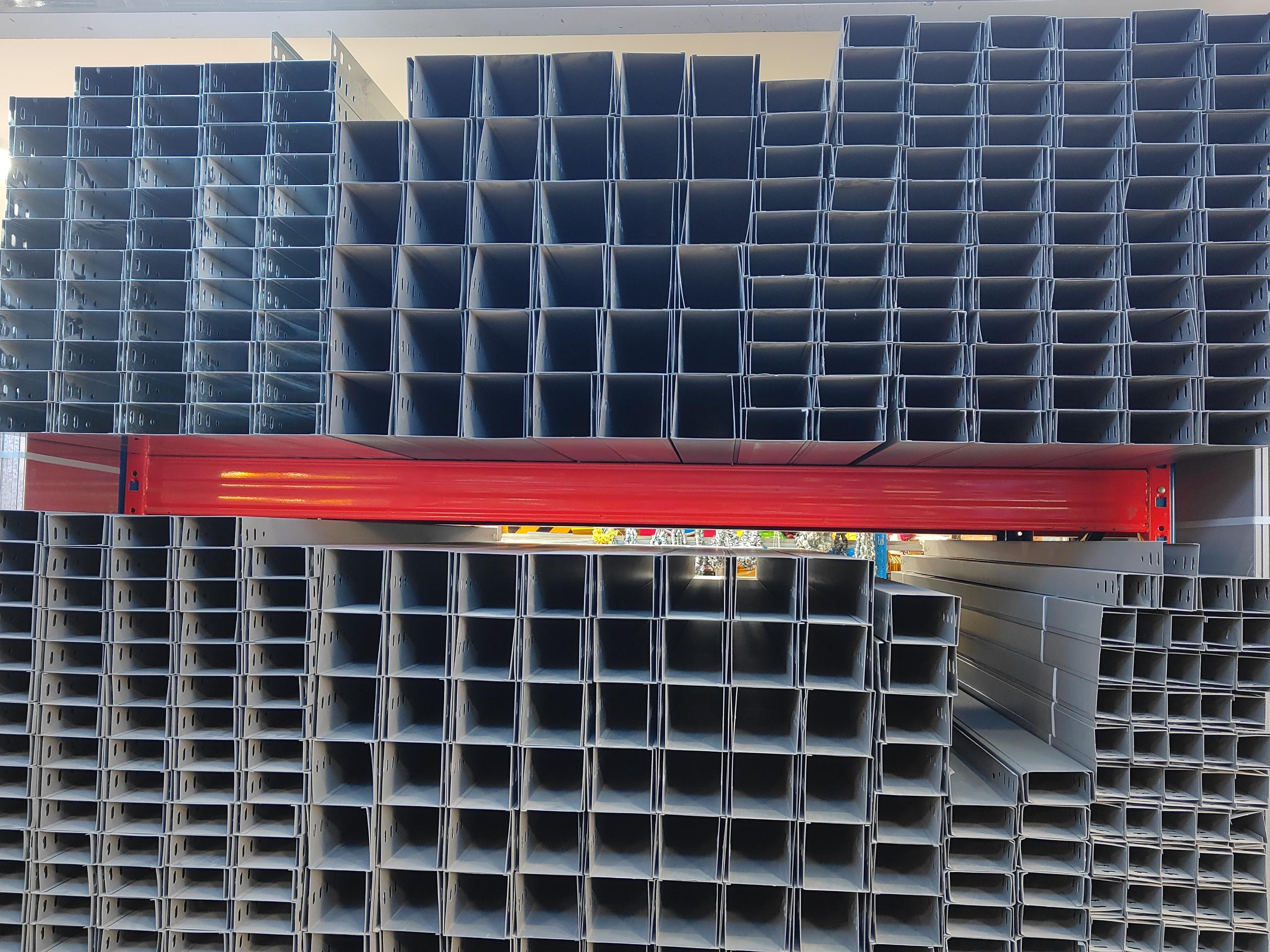
尺寸规格上,两者差距明显,这也是直观区分方法。山东电缆桥架尺寸偏大,常规规格从200×100mm到600×200mm不等,能容纳多根大直径电缆,适配大规模线缆集中敷设需求;线槽则体积小巧,尺寸远小于桥架,更适合少量细小线缆的规整收纳,无法承载厚重的电力电缆。而且桥架的材料厚度更足,比线槽更结实耐用,能应对工业场景的复杂工况。
In terms of size specifications, there is a significant difference between the two, which is also an intuitive way to distinguish them. The size of cable trays in Shandong is relatively large, with conventional specifications ranging from 200 × 100mm to 600 × 200mm. They can accommodate multiple large-diameter cables and are suitable for large-scale cable centralized laying needs; Cable trays are small in size and much smaller than cable trays, making them more suitable for orderly storage of small cables and unable to carry heavy power cables. Moreover, the material thickness of the bridge is thicker, more sturdy and durable than the trunking, and can cope with complex working conditions in industrial scenarios.
结构与密封性能上,两者设计差异显著。金属线槽多为全密封型,自带盖板,是整体式封闭结构,能有效防尘、防潮,保护内部细小导线,但散热性较差,因此对线缆填充率要求严格,不能过度堆放。而山东电缆桥架的结构更灵活,型号分为槽式、托盘式、梯架式、网格式等多种,并非全封闭设计——比如梯架式、网格式桥架散热性,适合高温工况下的电力电缆敷设;槽式桥架则可搭配盖板实现半封闭,兼顾防尘与散热,适配不同山东工程的场景需求,部分场所甚可不用盖板,灵活适配布线环境。
There is a significant difference in design between the two in terms of structure and sealing performance. Metal cable trays are mostly fully sealed with built-in cover plates, which are integral enclosed structures that can effectively prevent dust and moisture, protect small wires inside, but have poor heat dissipation. Therefore, strict requirements are placed on cable filling rates and excessive stacking is not allowed. The structure of cable trays in Shandong is more flexible, with various models including trough type, tray type, ladder type, grid format, etc. It is not a fully enclosed design - for example, ladder type and grid format cable trays have excellent heat dissipation and are suitable for laying power cables under high temperature conditions; The trough type bridge can be equipped with a cover plate to achieve semi closure, balancing dust prevention and heat dissipation, and adapting to the scene requirements of different Shandong projects. Some places even do not need a cover plate, flexibly adapting to the wiring environment.
安装规范上,两者的拐弯半径和跨距要求截然不同,这也是施工中容易出错的点。山东电缆桥架因承载的电缆直径大、数量多,拐弯半径要求更大,需贴合电缆弯曲特性,避免损伤线缆绝缘层;且桥架跨距较大,常规跨距可达1.5-3米,能减少支架安装数量,适配大型厂房、楼宇的长距离布线。而线槽因线缆细小,大多可拐直角弯,跨距也更小,一般不超过1米,更适合短距离、多拐角的小型布线场景,比如办公室、家庭的墙角布线。
In terms of installation specifications, the turning radius and span requirements of the two are completely different, which is also a point that is prone to errors during construction. Shandong cable tray requires a larger turning radius due to the large diameter and quantity of cables it carries, and needs to conform to the bending characteristics of the cables to avoid damaging the insulation layer of the cables; And the bridge span is relatively large, with a conventional span of up to 1.5-3 meters, which can reduce the number of bracket installations and adapt to long-distance wiring in large factories and buildings. Due to the small size of the cables, most cable trays can be bent at right angles and have smaller spans, generally not exceeding 1 meter, making them more suitable for short distance, multi corner small wiring scenarios, such as wall corner wiring in offices and homes.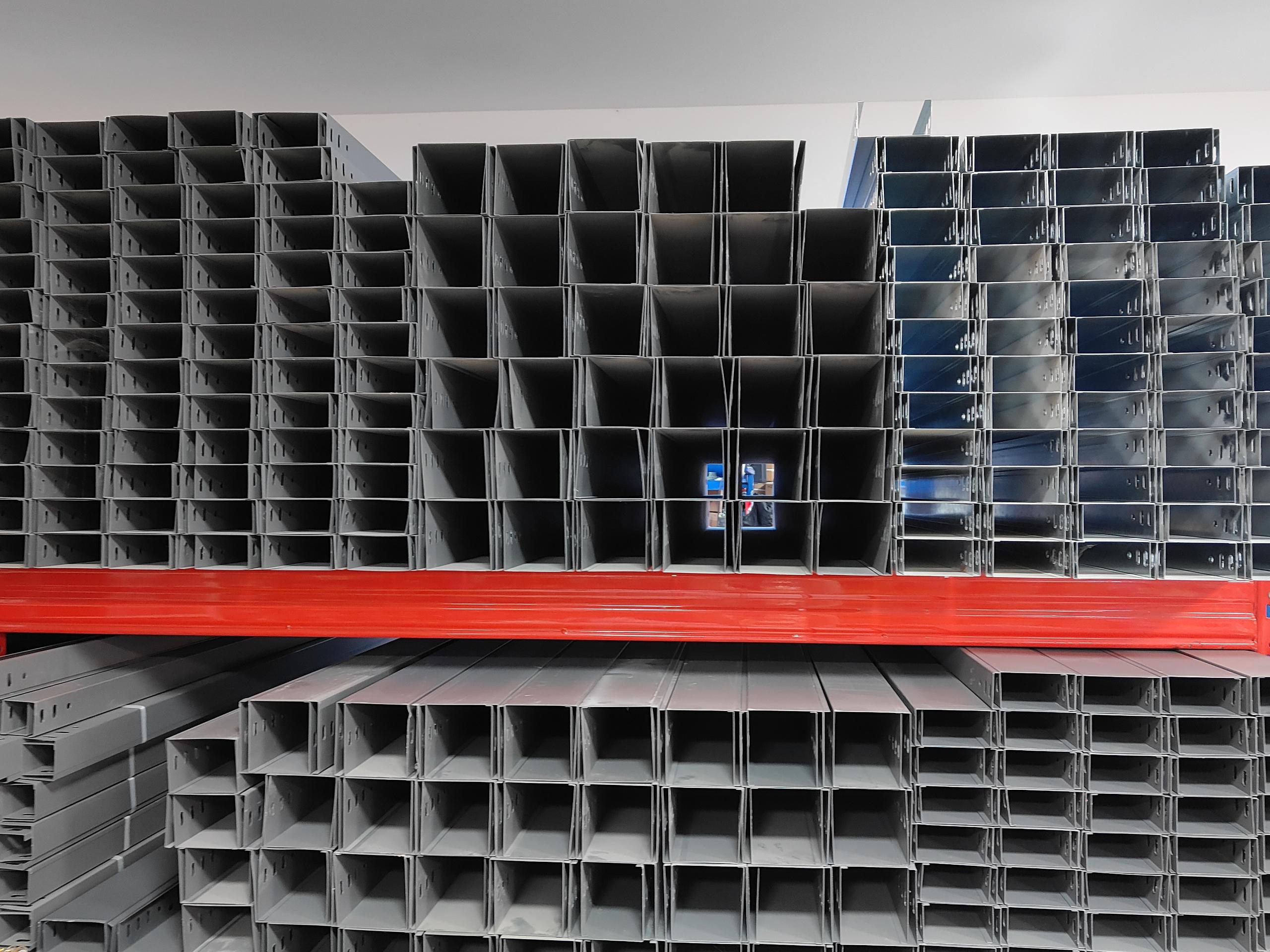
还有一个易混淆点:金属线槽和槽式桥架的材质、外形相似,很多人误以为只是尺寸差异,其实不然。二者材质虽都以镀锌钢板、不锈钢为主,但桥架的材质厚度更厚,承重能力更强,能应对工业场景的重载需求;且线槽主打“走线收纳”,桥架主打“电缆承载”,核心用途的差异,决定了二者不能混用。比如山东化工园区的强电布线,若误用线槽替代桥架,极易因承重不足、散热不佳引发电缆老化、短路等隐患。
There is another confusing point: the materials and shapes of metal cable trays and cable trays are similar, and many people mistakenly think that it is only a size difference, but in fact it is not. Although both materials are mainly galvanized steel plates and stainless steel, the material thickness of the bridge is thicker and has stronger load-bearing capacity, which can meet the heavy load requirements of industrial scenes; And the main function of cable trays is "cable storage", while the main function of cable trays is "cable carrying". The difference in core uses determines that the two cannot be mixed. For example, in the strong current wiring of Shandong Chemical Industrial Park, if cable trays are mistakenly used instead of cable trays, it is highly likely to cause safety hazards such as cable aging and short circuits due to insufficient load-bearing capacity and poor heat dissipation.
对山东工程人来说,精准选型的关键的是贴合场景与需求:工业生产、大型楼宇、变电站等强电布线,优先选山东电缆桥架,根据工况选对应的型号——高温场景选网格式、梯架式,防尘场景选槽式;家庭装修、办公室等弱电布线,选用线槽即可,兼顾收纳与便捷性。尤其山东化工、制造业发达,工业厂房布线对性、耐用性要求更高,选对桥架不仅能提升施工效率,还能减少后期运维成本。
For Shandong engineers, the key to accurate selection is to fit the scene and requirements: for strong electrical wiring in industrial production, large buildings, substations, etc., Shandong cable trays are preferred, and corresponding models are selected according to the working conditions - network format and ladder type for high temperature scenarios, and slot type for dust-proof scenarios; For weak current wiring in home decoration, offices, etc., cable trays can be used to balance storage and convenience. Especially with the developed chemical and manufacturing industries in Shandong, industrial plant wiring requires higher safety and durability. Choosing the right cable tray can not only improve construction efficiency, but also reduce later operation and maintenance costs.
总结一下,山东电缆桥架和线槽虽都是线缆敷设载体,但在用途、尺寸、结构、安装等6大方面差异显著,核心是“桥架承电缆、线槽走线缆”。很多工程出错,都是因为混淆二者的定位,盲目选用导致的。掌握这些区分要点,就能精准避开选型误区,让布线既合规又,适配不同场景的使用需求。
To sum up, although cable trays and trunking in Shandong are both cable laying carriers, there are significant differences in six aspects: purpose, size, structure, and installation. The core is that "cable trays support cables and trunking runs cables". Many engineering errors are caused by confusion in their positioning and blind selection. By mastering these distinguishing points, one can accurately avoid selection errors, make wiring compliant and safe, and adapt to the usage needs of different scenarios.
下一篇:2类核心支架!济南电缆桥架,抗震承重双达标
相关文章 / Recommended news
 阳极氧化铝合金桥架
- 托盘式电缆桥架
 梯式电缆桥架
 梯式不锈钢电缆桥架
 深灰色金属防火电缆桥架