
山东电缆桥架厚度选型避坑!90%采购踩过薄料陷阱,5档标准精准适配不返工
山东电缆桥架厚度选型避坑!90%采购踩过薄料陷阱,5档标准精准适配不返工
Shandong cable tray thickness selection avoids pitfalls! 90% of purchases have fallen into the trap of thin materials, with precise adaptation to 5 levels of standards without rework
在山东工业、建筑、市政等各类工程中,电缆桥架作为电缆敷设、保护的核心载体,其厚度选型的合理性,直接决定工程、使用寿命与后期运维成本。但据山东建材行业调研数据显示,90%的采购人员在电缆桥架选型时,曾因厚度选择不当踩坑,其中75%因选用过薄桥架,导致后期电缆重压变形、桥架脱落,30%因厚度冗余造成材料浪费,直接增加15%-25%的采购成本。更令人警惕的是,行业内存在“偷工减料”潜规则,部分小作坊将国标1.5mm厚度的桥架,实际做成1.2mm,看似节省成本,实则埋下隐患,某光伏项目就曾因桥架厚度不达标,出现电缆坍塌事故,仅返工费就超38万元。本文结合山东工程实操经验,明确电缆桥架厚度选型的5档核心标准,详解选型逻辑与避坑要点,帮山东企业、采购人员精准选型,规避隐患与成本浪费。
In various industrial, construction, municipal and other projects in Shandong, cable trays serve as the core carrier for cable laying and protection. The rationality of their thickness selection directly determines the safety, service life and later operation and maintenance costs of the project. However, according to research data from the building materials industry in Shandong, 90% of procurement personnel have stepped on pits due to improper thickness selection when selecting cable trays. Among them, 75% of them chose too thin bridge trays, resulting in deformation of cables under heavy pressure and detachment of trays in the later stage, and 30% caused material waste due to redundant thickness, directly increasing procurement costs by 15% -25%. What is even more alarming is that there are hidden rules of "cutting corners and using inferior materials" in the industry. Some small workshops turn the 1.5mm thickness of the national standard bridge into 1.2mm, which seems to save costs but actually poses safety hazards. A certain photovoltaic project once had a cable collapse accident due to the thickness of the bridge not meeting the standard, and the rework cost alone exceeded 380000 yuan. This article combines the practical experience of Shandong engineering to clarify the five core standards for selecting the thickness of cable trays, explain in detail the selection logic and key points for avoiding pitfalls, and help Shandong enterprises and procurement personnel accurately select and avoid safety hazards and cost waste.
电缆桥架的厚度,并非“越厚越好”,也不是“越薄越省成本”,核心是“按需适配”——结合桥架宽度、敷设场景、承载负荷,选择对应厚度的桥架,才能兼顾性、实用性与经济性。很多采购人员陷入“厚度越厚越”的误区,盲目选用厚壁桥架,不仅增加采购成本,还会加大安装难度;另有部分采购为压缩成本,选用过薄桥架,忽视桥架的承载能力,后期电缆敷设后,易出现桥架变形、断裂、脱落等问题,甚引发电路短路、火灾等事故,得不偿失。
The thickness of cable trays is not "thicker is better" or "thinner is more cost-effective". The core is "on-demand adaptation" - selecting the appropriate thickness of tray based on its width, installation scenario, and load-bearing capacity can balance safety, practicality, and economy. Many procurement personnel fall into the misconception that "thicker is safer" and blindly choose thick walled cable trays, which not only increases procurement costs but also increases installation difficulty; Another part of the procurement is to reduce costs by using overly thin bridge frames, neglecting the load-bearing capacity of the bridge frames. After the cable is laid in the later stage, problems such as deformation, fracture, and detachment of the bridge frames may occur, and even cause safety accidents such as circuit short circuits and fires, which are not worth the loss.
结合山东各类工程实操案例,经过长期实践总结,电缆桥架厚度选型可遵循5档核心标准,精准匹配不同宽度的桥架需求,兼顾性与经济性,这也是山东本地工程采购中广泛应用的实操标准,适配绝大多数工业、建筑、市政场景的电缆敷设需求。
Based on various engineering practical cases in Shandong and long-term practice, the selection of cable tray thickness can follow 5 core standards, accurately match the requirements of different widths of trays, and balance safety and economy. This is also a widely used practical standard in local engineering procurement in Shandong, suitable for the cable laying needs of the vast majority of industrial, construction, and municipal scenarios.
档,桥架宽度小于100mm时,选用1.0mm厚度。这类窄幅桥架,主要用于小型设备电缆、弱电电缆的敷设,如办公建筑弱电桥架、小型工业设备内部电缆桥架,其承载负荷较小,1.0mm厚度的桥架足以满足承载需求,既能保障电缆稳定敷设,又能避免厚度冗余造成的成本浪费。需要注意的是,即便宽度小于100mm,也不可选用低于1.0mm厚度的桥架,部分小作坊为低价竞争,选用0.8mm薄料,这类桥架承重能力极差,安装后易变形,甚无法承载电缆重量,埋下隐患。
In the first stage, when the width of the bridge is less than 100mm, a thickness of 1.0mm is selected. This type of narrow span cable tray is mainly used for laying cables for small equipment and weak current cables, such as weak current cable trays in office buildings and internal cable trays for small industrial equipment. Its load-bearing capacity is relatively small, and a 1.0mm thick cable tray is sufficient to meet the load-bearing requirements. It can ensure stable cable laying and avoid cost waste caused by thickness redundancy. It should be noted that even if the width is less than 100mm, cable trays with a thickness less than 1.0mm should not be used. Some small workshops choose 0.8mm thin materials for low price competition. Such cable trays have extremely poor load-bearing capacity, are prone to deformation after installation, and may even be unable to bear the weight of cables, posing safety hazards.
第二档,桥架宽度在100~300mm之间时,选用1.2mm厚度。这一档宽度的桥架,是山东工程中应用广泛的类型,适配大多数工业车间、写字楼、市政道路的电缆敷设,可承载多根电力电缆、控制电缆,承载负荷中等。1.2mm厚度的桥架,兼具承载性与灵活性,安装便捷,既能应对常规电缆的敷设需求,又能避免过薄导致的变形问题,同时相较于更厚的桥架,能有效控制采购成本,性价比极高。实践中发现,很多采购在这一档宽度选型时,误选1.0mm厚度,后期电缆敷设后,桥架易出现中间下沉、边缘变形的情况,需返工更换,反而增加工期与成本。
In the second stage, when the width of the bridge is between 100-300mm, a thickness of 1.2mm is selected. This wide cable tray is the most widely used type in Shandong engineering, suitable for cable laying in most industrial workshops, office buildings, and municipal roads. It can carry multiple power cables, control cables, and has a medium load capacity. A 1.2mm thick cable tray combines load-bearing capacity and flexibility, and is easy to install. It can meet the requirements of conventional cable laying while avoiding deformation problems caused by being too thin. Compared to thicker cable trays, it can effectively control procurement costs and has a high cost performance ratio. In practice, it has been found that many purchasers mistakenly select a thickness of 1.0mm when selecting this width. After the cable is laid in the later stage, the bridge frame is prone to sinking in the middle and deforming at the edges, requiring rework and replacement, which actually increases the construction period and cost.
第三档,桥架宽度在300~500mm之间时,选用1.5mm厚度。这类中宽幅桥架,主要用于大型工业车间、高层建筑的主电缆敷设,需承载多根粗径电力电缆,承载负荷较大,对桥架的结构强度要求更高。1.5mm厚度的桥架,结构强度充足,能有效分散电缆重量,避免桥架变形、断裂,同时具备良好的抗腐蚀、抗老化性能,适配山东不同气候环境,尤其适合户外、潮湿环境的电缆敷设。需要注意,这类宽度的桥架若选用1.2mm厚度,长期承载 heavy 电缆,极易出现桥架坍塌,引发事故,某地铁项目就曾因桥架厚度不足,出现连接处缝隙超标,防水胶无法填补,终返工重做,延误工期15天。
In the third stage, when the width of the bridge is between 300-500mm, a thickness of 1.5mm is selected. This type of medium to wide width cable tray is mainly used for laying main cables in large industrial workshops and high-rise buildings. It needs to carry multiple large-diameter power cables, with a high load-bearing capacity and higher structural strength requirements for the cable tray. The 1.5mm thick cable tray has sufficient structural strength, can effectively disperse the cable weight, avoid deformation and fracture of the cable tray, and has good corrosion resistance and aging resistance. It is suitable for different climatic environments in Shandong, especially for outdoor and humid cable laying. It should be noted that if this type of bridge with a width of 1.2mm is used to carry heavy cables for a long time, it is prone to collapse and cause safety accidents. In a subway project, due to insufficient thickness of the bridge, the gaps at the connection exceeded the standard, and the waterproof glue could not be filled. In the end, it was reworked and the construction period was delayed by 15 days.
第四档,桥架宽度在500~800mm之间时,选用2.0mm厚度。这类宽幅桥架,主要用于工业园区、大型市政工程、变电站等场景,需承载大量粗径电力电缆、通信电缆,承载负荷极大,且部分场景需长期暴露在户外,面临风吹、日晒、雨淋等恶劣环境,对桥架的厚度与结构强度要求极高。2.0mm厚度的桥架,结构稳固,承载能力强,能有效抵御户外恶劣环境的侵蚀,避免因电缆重压、环境影响导致的桥架损坏,保障电缆长期稳定运行。这类宽度的桥架,严禁选用1.5mm及以下厚度,否则后期极易出现隐患,增加运维成本。
In the fourth level, when the width of the bridge is between 500-800mm, a thickness of 2.0mm is selected. This type of wide cable tray is mainly used in industrial parks, large-scale municipal engineering, substations and other scenarios, which require carrying a large number of large-diameter power cables and communication cables, with extremely high load capacity. Some scenarios also require long-term exposure to harsh environments such as wind, sun, rain, etc., which require extremely high thickness and structural strength of the cable tray. A 2.0mm thick cable tray has a stable structure and strong load-bearing capacity, which can effectively resist the erosion of harsh outdoor environments, avoid damage to the cable tray caused by cable pressure and environmental impact, and ensure the long-term stable operation of cables. It is strictly prohibited to use cable trays of this width with a thickness of 1.5mm or less, otherwise safety hazards may occur in the later stage, increasing operation and maintenance costs.
第五档,桥架宽度大于800mm时,选用2.2mm厚度。这类超宽幅桥架,主要用于大型电站、化工园区、特大型建筑的主干电缆敷设,承载负荷极大,且桥架自身跨度较大,对厚度的要求为严格。2.2mm厚度的桥架,能确保桥架自身的结构稳定性,避免因跨度大、电缆重导致的桥架弯曲、变形、脱落,同时具备极强的抗冲击、抗腐蚀性能,适配各类复杂工业场景,满足长期运行需求。山东某化工园区曾因超宽桥架选用2.0mm厚度,后期出现桥架中间弯曲变形,电缆受力不均,不得不停工更换,直接经济损失超50万元,这也印证了超宽桥架厚度选型的重要性。
In the fifth level, when the width of the bridge is greater than 800mm, a thickness of 2.2mm is selected. This type of ultra wide cable tray is mainly used for laying main cables in large power stations, chemical parks, and extra large buildings. It can bear a huge load and has a large span, requiring the strictest thickness. A 2.2mm thick cable tray can ensure the structural stability of the tray itself, avoiding bending, deformation, and detachment caused by large spans and heavy cables. At the same time, it has strong impact and corrosion resistance, suitable for various complex industrial scenarios, and meets the long-term safety operation requirements. A chemical industrial park in Shandong once chose a thickness of 2.0mm for ultra wide cable trays, but later there was bending deformation in the middle of the tray, uneven cable stress, and had to stop work for replacement, resulting in a direct economic loss of over 500000 yuan. This also confirms the importance of selecting the thickness of ultra wide cable trays.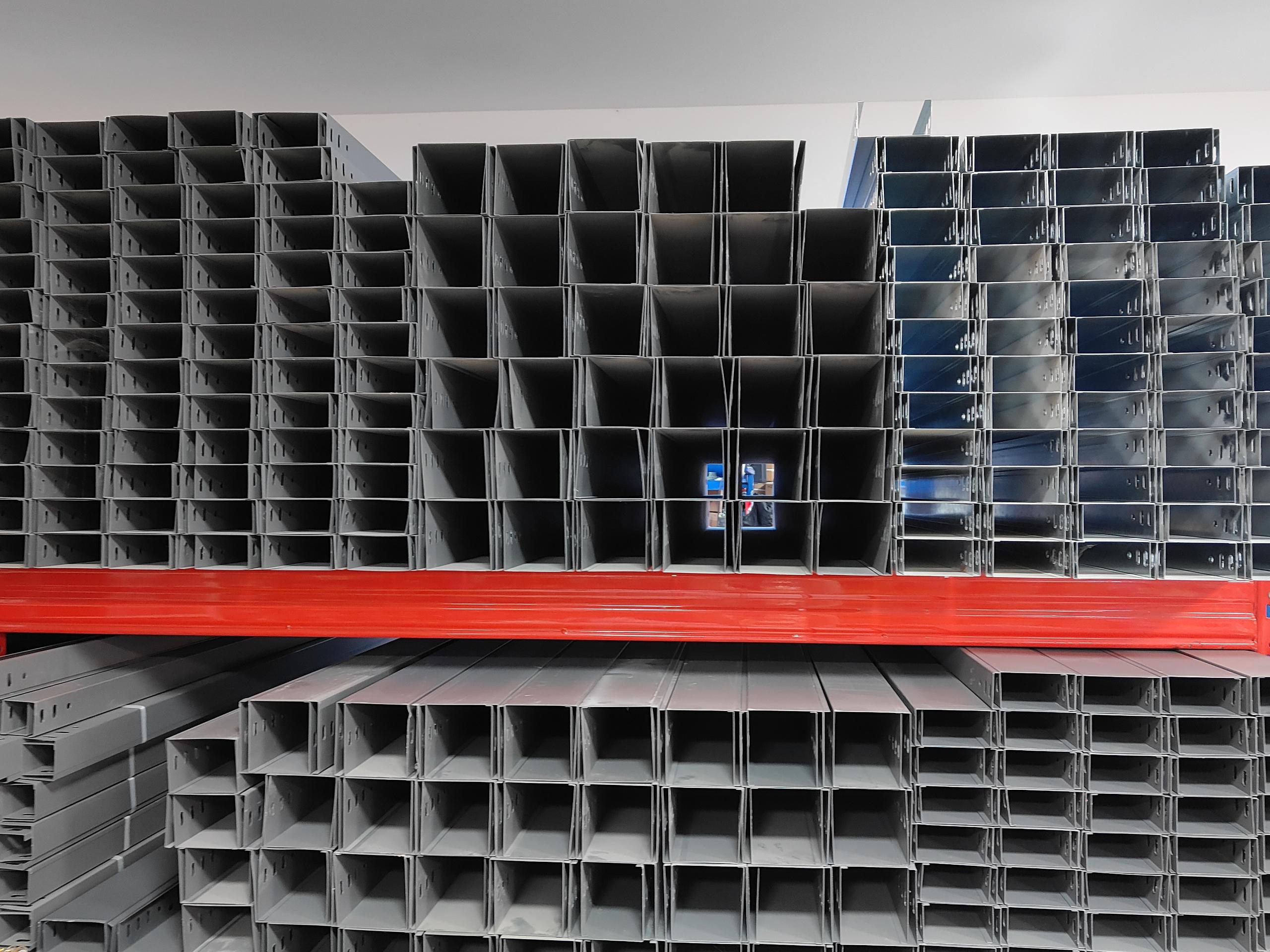
除了遵循上述5档厚度选型标准,山东企业在电缆桥架选型时,还需规避两大核心误区,才能进一步保障选型合理、工程。个误区,盲目追求低价,选用薄料桥架。部分采购为压缩采购成本,选择极低的桥架,这类桥架大多存在厚度不达标、材质劣质等问题,看似节省了前期成本,后期却需频繁维修、更换,甚引发事故,综合成本反而更高,据统计,选用薄料桥架的工程,后期运维成本平均增加40%以上。第二个误区,忽视敷设场景,盲目套用厚度标准。上述5档标准为常规场景的选型参考,若桥架用于户外、潮湿、腐蚀等特殊环境,或桥架跨度较大、承载负荷远超常规,需在对应厚度标准的基础上,适当增加0.2~0.3mm厚度,确保桥架的稳定性与使用寿命。
In addition to following the five thickness selection standards mentioned above, Shandong enterprises also need to avoid two core misconceptions when selecting cable trays in order to further ensure reasonable selection and engineering safety. The first misconception is blindly pursuing low prices and choosing thin material bridge frames. Part of the procurement is aimed at reducing procurement costs by choosing cable trays with extremely low prices. Most of these cable trays have problems such as inadequate thickness and poor material quality, which may seem to save initial costs, but require frequent maintenance and replacement in the later stage, even causing safety accidents. The overall cost is actually higher. According to statistics, projects that use thin material cable trays have an average increase of more than 40% in maintenance costs in the later stage. The second misconception is to ignore the installation scenario and blindly apply thickness standards. The above 5 standards are selection references for conventional scenarios. If the bridge is used in special environments such as outdoor, humid, and corrosive environments, or if the bridge span is large and the load-bearing capacity far exceeds conventional standards, it is necessary to increase the thickness by 0.2~0.3mm on the basis of the corresponding thickness standards to ensure the stability and service life of the bridge.
当前,山东正推进新型工业化、新型城镇化建设,各类工程对电缆桥架的需求持续攀升,电缆桥架的选型合理性,直接关系到工程质量与。据山东工程质量监督部门数据显示,选用符合厚度标准的电缆桥架,能将后期桥架损坏、电缆故障的发生率降低85%以上,同时减少材料浪费与返工成本,提升工程整体性价比。而厚度选型不当,不仅会影响工程进度,还可能埋下隐患,面临质量验收不合格的风险。
Currently, Shandong is promoting the construction of new industrialization and new urbanization, and the demand for cable trays in various projects continues to rise. The rationality of cable tray selection directly affects the quality and safety of engineering. According to data from the Shandong Engineering Quality Supervision Department, selecting cable trays that meet thickness standards can reduce the incidence of later tray damage and cable failures by more than 85%, while reducing material waste and rework costs, and improving the overall cost-effectiveness of the project. Improper selection of thickness not only affects the progress of the project, but may also pose safety hazards and face the risk of unqualified quality acceptance.
很多采购人员表示,电缆桥架厚度选型看似简单,实则涉及承载负荷、敷设场景、宽度规格等多个因素,稍不注意就会踩坑。尤其山东部分工程涉及户外、化工、高温等特殊场景,对桥架厚度的要求更为严格,仅凭经验选型,极易出现失误。此外,行业内部分小作坊缺乏规范生产意识,偷工减料现象频发,进一步增加了采购选型的难度,很多采购难以分辨桥架实际厚度是否达标,导致选型失误。
Many procurement personnel have expressed that the selection of cable tray thickness may seem simple, but it actually involves multiple factors such as load-bearing capacity, laying scenarios, width specifications, etc. If not careful, it can lead to pitfalls. Especially for some projects in Shandong that involve special scenarios such as outdoor, chemical, and high temperatures, the requirements for bridge thickness are more stringent. Relying solely on experience for selection is prone to errors. In addition, some small workshops in the industry lack awareness of standardized production, and the phenomenon of cutting corners frequently increases the difficulty of procurement and selection. Many purchasers find it difficult to distinguish whether the actual thickness of the bridge is up to standard, resulting in selection errors.
我们深耕山东电缆桥架领域多年,熟悉山东各类工程的敷设场景与选型需求,严格遵循上述5档厚度选型标准,生产的电缆桥架厚度达标、材质优良,适配工业、建筑、市政等各类场景,杜绝偷工减料、厚度不达标等问题。我们可根据山东企业的工程需求、桥架宽度、敷设场景,为采购人员提供一对一选型指导,帮企业避开选型误区,精准匹配合适厚度的电缆桥架,兼顾性、实用性与经济性,同时提供完善的售后保障,确保桥架安装、使用全过程无忧。
We have been deeply involved in the field of cable trays in Shandong for many years, familiar with the laying scenarios and selection requirements of various projects in Shandong. We strictly follow the five thickness selection standards mentioned above, and produce cable trays with standard thickness and excellent materials that are suitable for various scenarios such as industry, construction, and municipal engineering. We eliminate problems such as labor theft, material reduction, and substandard thickness. We can provide one-on-one selection guidance for procurement personnel based on the engineering needs, bridge width, and laying scenarios of Shandong enterprises, helping enterprises avoid selection errors, accurately match cable trays of suitable thickness, and balance safety, practicality, and economy. At the same time, we provide comprehensive after-sales support to ensure worry free installation and use of cable trays throughout the entire process.
如果您是山东企业采购人员、工程管理者,正面临电缆桥架厚度选型难、担心踩薄料陷阱、不知道如何匹配宽度与厚度等问题,欢迎咨询。我们将结合您的工程实际,详解5档厚度选型标准,帮您精准选型,规避隐患与成本浪费,助力您的工程顺利推进,实现质量与效益的双重提升。
If you are a procurement personnel or engineering manager of a Shandong enterprise, facing difficulties in selecting cable tray thickness, worrying about falling into thin material traps, and not knowing how to match width and thickness, please feel free to consult. We will provide a detailed explanation of the 5 thickness selection standards based on your actual engineering situation, helping you accurately select, avoid safety hazards and cost waste, and assist in the smooth progress of your project, achieving a dual improvement in quality and efficiency.
本文由 山东电缆桥架 友情奉献.更多有关的知识请点击 https://www.sdhangfeng.com/ 真诚的态度.为您提供为的服务.更多有关的知识我们将会陆续向大家奉献.敬请期待.
This article is a friendly contribution from Shandong Cable Bridge For more related knowledge, please click https://www.sdhangfeng.com/ Sincere attitude To provide you with comprehensive services We will gradually contribute more relevant knowledge to everyone Coming soon.
下一篇:济南电缆桥架选型避坑!热浸锌vs不锈钢实测对比,70%工程方选错多花30%成本
相关文章 / Recommended news
 电缆桥架内部电缆的布线方式有哪些?
 阳极氧化铝合金桥架
- 托盘式电缆桥架
 梯式电缆桥架
 梯式不锈钢电缆桥架